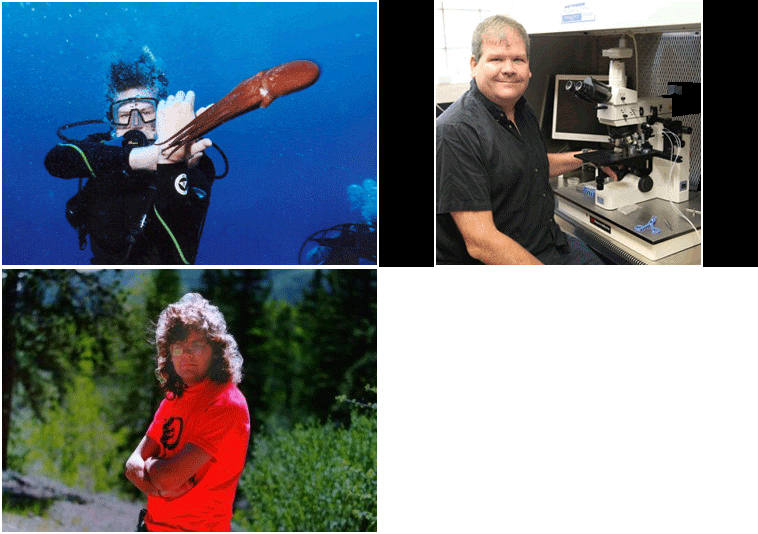
I am a Professor in the School of Earth and Space Exploration at Arizona State University. As a cosmochemist, I study the origin and evolution of stars, the galaxy, and the solar system, both through laboratory analysis of extraterrestrial materials like meteorites and returned comet and asteroid samples and through planetary remote sensing via spacecraft. I have played leading roles in the analysis of comet and solar wind samples returned by NASA’s Stardust and Genesis missions, respectively, and am actively analyzing asteroid samples returned by the Hayabusa2 and OSIRIS-REx missions. I served as Deputy Principal Investigator on NASA’s MESSENGER mission to Mercury. I am currently a NASA Participating Scientist on the Japanese asteroid sample-return mission, Hayabusa2 and a member of the ESA/JAXA BepiColombo Mercury mission team. I received the Alfred O. Nier prize of the Meteoritical Society in 2001 and was named a fellow of the same society in 2010. Asteroid 5992 Nittler is named in my honor.

(She/her)
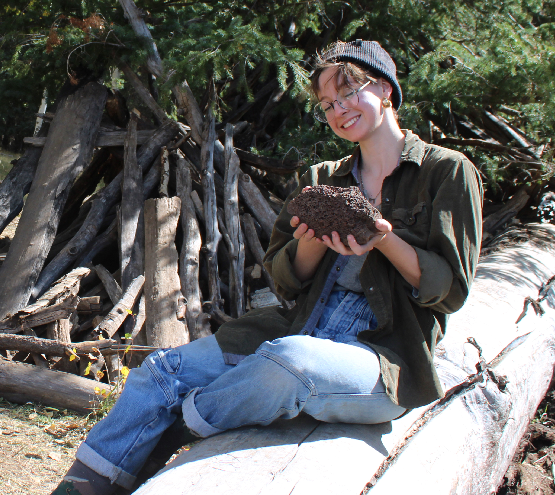
Second project student working with Dr. Nittler. Sarinah is investigating sulfur isotope anomalies in meteorites to understand mass independent fractionation of sulfur during the early Solar System. She uses NanoSIMS and SEM to detect and measure sulfur and its isotopes for her second project. Her main research area is organic geochemistry and its application for ocean worlds and she works with Everett Shock for her main project.

(She/her)
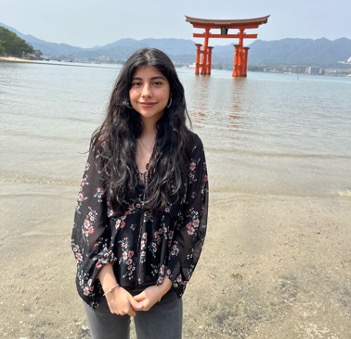
Second project student working with Dr. Nittler. Cassandra is developing SEM methods for non-destructively identifying large presolar SiC grains in meteorites in order to perform trace-element isotopic measurements on them and better constrian the stellar origin of heavy elements. Her primary advisor is Melanie Barboni
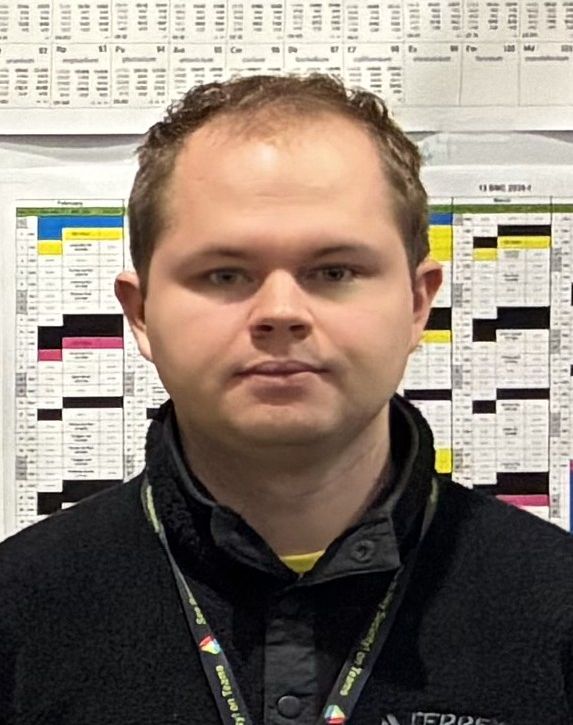
(he/him)
Second project student working with Dr. Nittler. Alem is working on analysis of MESSENGER x-ray spectra from Mercury. His primary advisor is Dan Shim

(he/him)
Undergraduate working with Dr. Nittler on preseolar grains in CO chondrites.